Family GPS Locator・Kids Safety
- 4.6
- Rating
- 1.00M
- Installs
- Free
- Price

 Analysis by App-foxy
When I review a family location app, I look beyond the promise of seeing a child on a map. The useful question is whether it can become a calm, repeatable part of everyday family life without turning every trip into a tracking exercise. Family GPS Locator・Kids Safety is aimed squarely at that job: it is a parenting app built around family location, child safety, and GPS-based awareness. After using it, I see it as a practical option for parents who want a simple way to check whether a child has reached a familiar place, while understanding that it works best as a support tool rather than a substitute for conversation or judgment.
The app is free to download, carries an Everyone age rating, and is made by Parental control & GPS tracker. Its store presence is already reasonably established, with more than half a million installs and an average rating of 4.6 from roughly 6.8 thousand ratings. Those figures suggest that the basic idea is resonating with families, but they do not remove the need to set it up thoughtfully. Location apps are only helpful when everyone involved understands how they are being used.
How I would build a dependable daily routine
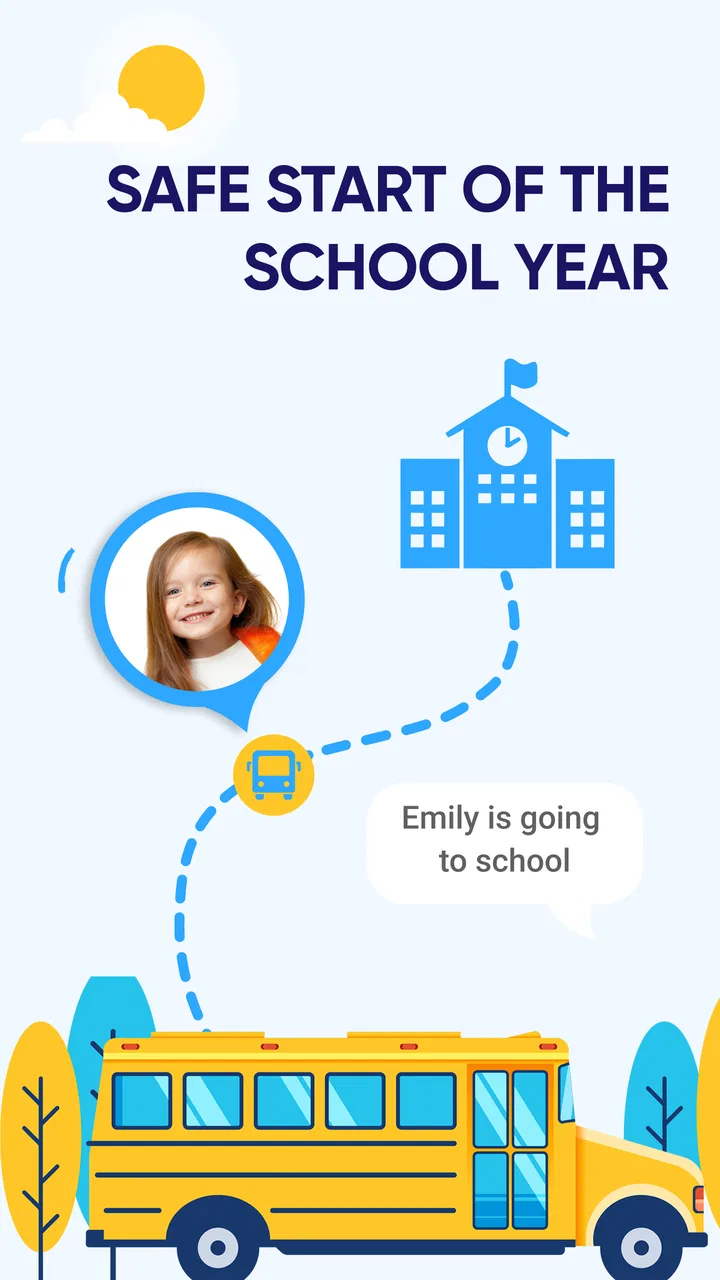
The most reliable way to use this app is to begin with one uncomplicated routine instead of trying to monitor every movement. For example, a parent might use it during the school commute, after-school activities, or a visit to a relative. The child leaves, the parent checks the family location view at a sensible moment, and the family treats the result as a prompt for action only when it matters. That approach keeps the app from becoming a source of constant notifications or unnecessary worry.
You May Also Like

 Blood Strike: 2.5 Anniversary
Blood Strike’s Loadouts Turn Every Drop Into a Tactical Gamble
A close look at Blood Strike’s custom loadouts: how fast access to signature weapons reshapes its battle royale rhythm, rewards preparation, and narrows the gap between fights.

 Pandora - Music & Podcasts
Pandora’s Music Is Easy to Start, but Harder to Recover
Pandora’s strength is its low-effort path from a seed to a station. Its weak spot is how much confidence it asks you to place in connection, setup, and quiet recovery.

 8 Ball Pool
 Is Built on Rivalries, Rematches, and Routine
A close look at the rivalries, rematches, shared routines, and unanswered safety questions that turn a quick pool match into a persistent mobile community.

 Samsung Music
’s Quiet Strength Is Playing What You Already Own
Its reach comes less from spectacle than from dependable access to a personal library. That simplicity is both the app’s strongest retention engine and its ceiling.

 AccuWeather: Weather Radar
AccuWeather Review: A Quick, Clear Forecast for Everyday Decisions
For everyday plans, the best forecast is the one you can understand quickly. AccuWeather makes rain timing, radar, and local conditions easy to act on, with a few trade-offs.

 Hill Climb Racing
Why Hill Climb Racing Still Turns Crashes Into One More Run
A tiny car, a bumpy hill and one more upgrade: Hill Climb Racing keeps resurfacing because its simple chaos makes every near-miss feel personal.
More From Our News Desk
View All News


I would start by adding the family members who genuinely need to participate, then agree on what a normal check means. A child who walks home does not need a parent staring at the map continuously. A quick look around the expected arrival time is more useful, especially when paired with a simple rule such as calling if the location seems unusual or the child has not arrived. The app can provide context, but the family still needs a clear human routine around it.
One everyday example shows where the app fits well. Imagine a child leaving an activity later than usual while the parent is still at work. Instead of sending repeated messages asking where they are, the parent can check the family location and see whether the child is moving toward home or remains near the activity venue. If the location looks normal, the parent can wait. If it does not, the parent has a useful starting point for a call. That is a small distinction, but it can reduce needless interruptions.
I also recommend deciding in advance when location checking is appropriate. School arrival, a late pickup, a crowded public event, or an unfamiliar route are reasonable moments. Checking simply because the map is available is less healthy and can undermine trust. The strongest safety setup is a shared habit, not constant surveillance. This matters particularly with older children, who are more likely to cooperate when the purpose and boundaries are explained clearly.
The app’s family focus makes it more suitable for households than for someone who only wants a private map tool. It is intended to connect location awareness with parenting concerns, so the value comes from having the right people in the same safety routine. If your need is only to share a meeting point once, a regular mapping app may be quicker. If your need is continuing family awareness, this app is more relevant.
Settings I would check before relying on it
Before using Family GPS Locator・Kids Safety on a real trip, I would walk through the app’s available setup screens carefully rather than accepting every default without thought. The important goal is to make sure the family relationship, location-sharing arrangement, and expected use all match one another. A location tool can feel confusing when a parent expects a live update but the family has not completed the same setup on the other side.
I would also check the phone’s own location and battery behavior. GPS use depends on the device, its operating system, and the way the phone manages background activity. A child’s phone with very little battery, restricted location access, or an aggressive power-saving mode may not provide the experience a parent expects. That is not a reason to blame the app immediately; it is a reason to include phone readiness in the family routine.
A useful habit is to test the arrangement while everyone is together. Have the child carry the phone to another room or take a short walk, then compare what the parent sees with what the family expected. This reveals practical friction before a busy school morning or an evening pickup. It also gives the child a chance to ask what the app shows and when it will be checked.
Privacy deserves attention here. A parent should avoid treating the app as permission to inspect a child’s every stop without explanation. I would agree on which situations justify a check and revisit that agreement as the child becomes more independent. For younger children, the parent may control most decisions. For teenagers, transparency becomes much more important. The same tool can support safety or create resentment depending on how it is introduced.
Another setting-related point is notification discipline. If the app offers alerts or repeated updates in the version you use, I would keep them focused on situations that require a response rather than enabling every possible signal. Too many alerts train people to ignore them. A quiet, meaningful alert is more useful than a stream of low-value messages. When the app is used for a regular route, a parent can often rely on a planned check instead of reacting to every movement.
The current version is 1.484 and it supports devices running Android 7.0 or later. That makes compatibility a straightforward thing to verify before installing it on an older family handset. The app is free to start, while in-app purchases range from $0.99 to $99.99 per item. I would therefore review any purchase screen carefully and decide whether the free experience already covers the family’s needs before committing to anything extra.
Faster patterns that make the app less intrusive
Experienced users usually get more value from repeatable patterns than from opening an app randomly. One pattern I like is the “departure, arrival, exception” routine. Check around departure if the situation is unusual, check around the expected arrival time, and investigate only when something differs from the agreed plan. This gives the location feature a clear purpose and prevents it from taking over the day.
A second pattern is to pair the app with a short family message. If a child changes plans, they should send a quick update rather than relying on the map to explain everything. The location can confirm the general situation, but a message can explain why the route changed. This is especially important when a child stops at a friend’s home, takes a different bus, or stays late at an activity. A map shows context; it rarely supplies the whole story.
I would also create a pre-trip checklist for situations that matter: phone charged, location available, child knows the check-in expectation, and parent knows the planned destination. This may sound ordinary, but it addresses the most common weakness of any GPS-based routine: people assume the tool will solve a problem that began with missing preparation. The app is most useful when it is one part of a simple plan.
For families with several children, avoid turning every person into an identical tracking case. A younger child walking to a nearby activity may need a different routine from an older child traveling independently. Use the app according to the actual risk and the child’s maturity. This makes the system easier to maintain and avoids unnecessary checking for children who do not need the same level of attention.
There is also a useful distinction between reassurance and emergency response. A parent checking whether a child reached practice is using the app for reassurance. A parent dealing with a genuine emergency needs direct communication and appropriate local help, not just a map screen. I would never make the app the only safety plan. Keep important phone numbers, pickup arrangements, and backup contacts available separately.
Another practical tip is to review the routine after a week rather than adjusting it every hour. Ask whether the checks were useful, whether alerts were too frequent, and whether the child understood the arrangement. If the answer is no, simplify the process. The best setup is the one the family can follow consistently during ordinary weeks, not the most complicated configuration imaginable.
Where this app is strong, and where its limits matter
Its clearest strength is focus. Family GPS Locator・Kids Safety is not trying to be a general productivity tool or a social network. Its purpose is easy to understand: help families use GPS location awareness around children and household safety. That makes it approachable for a parent who wants a dedicated family option instead of assembling a routine from several unrelated apps.
It is also a reasonable fit for parents who want a visual check rather than constant texting. During a busy day, seeing that a child is still near an expected location can answer a basic question quickly. The app can be particularly useful for school runs, extracurricular activities, visits to unfamiliar places, and families coordinating pickups across different schedules.
Still, GPS location should never be read as perfect certainty. A displayed position may not capture the detail a parent imagines, and a map cannot explain whether a child is safe, why they stopped, or whether the phone is with them. Device battery, connectivity, phone settings, and user behavior all affect the result. I would treat the location as helpful evidence, not as an unquestionable live account of reality.
This is also where the app may not suit everyone. Families that strongly prefer not to share ongoing location may be happier with occasional check-in messages or temporary location sharing through a standard mapping service. Parents looking for extensive device management, screen-time controls, content filtering, or detailed activity supervision should compare it with a broader parental-control suite. The family GPS focus is useful, but it should not be mistaken for an all-purpose parenting dashboard.
There is a trade-off between simplicity and depth. A dedicated locator can be easier to understand than a large parental-control platform, but a larger platform may offer more tools in one place. Conversely, a normal map app may be faster for a one-off meeting and may feel less formal. I would choose this app when the family wants a recurring location routine and does not need a much wider collection of controls.
Cost is another point to consider. The free starting price lowers the barrier to trying it, but the available in-app purchases mean families should pay attention during setup and while exploring additional options. I would not assume that every useful function is included in the free experience, nor would I purchase anything before testing the basic workflow with the people who will actually use it.
Who should use it, and who should choose something else
I would recommend this app to parents of younger children, families coordinating several daily journeys, and anyone who wants a dedicated GPS safety tool with a clear family purpose. It can also help relatives who share responsibility for pickups, provided everyone agrees on who checks the location and what action follows from a concern.
It is less suitable for someone who wants a completely passive solution. A parent still needs to explain the routine, keep the child’s phone usable, interpret the location sensibly, and communicate when plans change. It is also not the right choice for a family seeking a complete digital parenting system with extensive controls beyond location awareness.
For teenagers, I would make consent and transparency central. The app may be technically useful, but the relationship around it matters more than the map. Agreeing on check-in windows and exceptions is likely to work better than presenting tracking as an invisible rule. If a teenager refuses any location-sharing arrangement, installing another app will not solve the underlying trust problem.
For a child who does not reliably carry a phone, the app’s usefulness is naturally reduced. The family should consider whether the device is charged, carried, and available during the situations that matter. A location tool cannot help much when the phone is left at home or handed to someone else. That practical limitation should be considered before judging the app’s performance.
My verdict after using it as a family routine
Family GPS Locator・Kids Safety is best understood as a focused family locator rather than a complete parental-control package. I like its straightforward purpose and the way it can support a low-stress routine around school, activities, and pickups. Its real value appears when parents use it at sensible moments, combine it with direct communication, and avoid treating every map update as an emergency.
The app has enough appeal to explain its 4.6 average rating and its growing install base, but I would still approach it with realistic expectations. It cannot replace a charged phone, a clear family plan, or an actual conversation. It also may not be the best choice for families that need advanced device supervision or only occasional location sharing.
For my own recommendation, I would install it, test the family workflow at home, review the phone and privacy settings, and use the free experience for ordinary situations before considering any purchase. If the family wants a dedicated place to check child location and can agree on respectful boundaries, this app is worth trying. Its strongest feature is not simply the map; it is the repeatable habit built around the map.
Developed by Parental control & GPS tracker, the app is available for Android users on version 7.0 or later, with an Everyone content rating. I would choose it for practical family awareness, not for constant supervision, and I would keep a simpler backup plan for communication and emergencies. Used with that balance, it can become a useful part of a parent’s routine without becoming the center of family life.
FAQs for Family GPS Locator・Kids Safety
01What features does Family GPS Locator offer for ensuring kids' safety?
Family GPS Locator provides real-time location tracking, allowing parents to monitor their child's whereabouts at any time. It includes geofencing capabilities, enabling alerts when kids enter or leave designated safe zones. The app also offers an SOS feature for emergencies, ensuring quick communication and response when needed.
02How accurate is the location tracking in the Family GPS Locator app?
The Family GPS Locator app uses GPS technology to provide precise location tracking. While the accuracy can depend on the device and environmental factors like signal strength, the app generally offers reliable updates. Users can view real-time movement and receive notifications about location changes promptly.
03Is the Family GPS Locator app secure and private?
Yes, the app prioritizes user privacy and data security. It employs encryption to protect location data and personal information. Access is restricted to authorized users, ensuring that only family members or guardians can view location details. Regular updates help maintain security standards against potential threats.
04Are there subscription fees or in-app purchases associated with Family GPS Locator?
The Family GPS Locator offers both free and premium versions. The free version includes basic location tracking features, while the premium subscription provides advanced options such as extended location history, priority customer support, and additional geofencing settings. Users can choose a plan based on their needs.
05What devices and operating systems are compatible with Family GPS Locator?
Family GPS Locator is available for both Android and iOS devices. It supports smartphones and tablets with the necessary GPS and internet capabilities. The app is regularly updated to ensure compatibility with the latest operating system versions, providing a seamless user experience across different devices.
Pros
- Real-time location tracking for peace of mind.
- User-friendly interface for easy navigation.
- Customizable alerts for specific zones.
- Battery-saving mode to extend phone life.
- Cross-platform support for Android and iOS.
Cons
- Requires constant internet connection.
- May drain battery faster without saving mode.
- Subscription needed for premium features.
- Location accuracy can vary in rural areas.
- Privacy concerns over data sharing.

Family GPS Locator・Kids Safety
Gallery